
 MRF TYRES


Why Tyre Health is Crucial for Avoiding Road Accidents
Every journey depends on four small contact patches between your vehicle and the road. These contact patches are your tyres, and their condition affects how quickly you can stop, how accurately you can steer, and how stable your vehicle remains when conditions change. Drivers often focus on brakes, airbags, and engine maintenance while overlooking the only components directly touching the road.
The practical answer to Why Tyre Health is Crucial for Avoiding Road Accidents lies in three essential factors: grip, control, and reliability. Healthy tyres support safer handling, reduce stopping distances, and lower the risk of sudden failure. Regular tyre checks should therefore be treated as a basic road-safety habit rather than an occasional maintenance task.
Tyres Are Your Vehicle’s First Safety System
Grip is the foundation of safe driving. It allows your vehicle to accelerate, corner, and brake without losing contact with the road. To understand Why Tyre Health is Crucial for Avoiding Road Accidents, consider what happens when tyres become worn, underinflated, or damaged. Their ability to hold the road weakens, particularly during emergency braking or sudden steering movements.
Good tyres also help electronic safety features work effectively. Systems such as anti-lock braking, traction control, and electronic stability control depend on tyres maintaining sufficient contact with the road surface. If the tyres cannot provide adequate grip, these systems may not perform as expected.
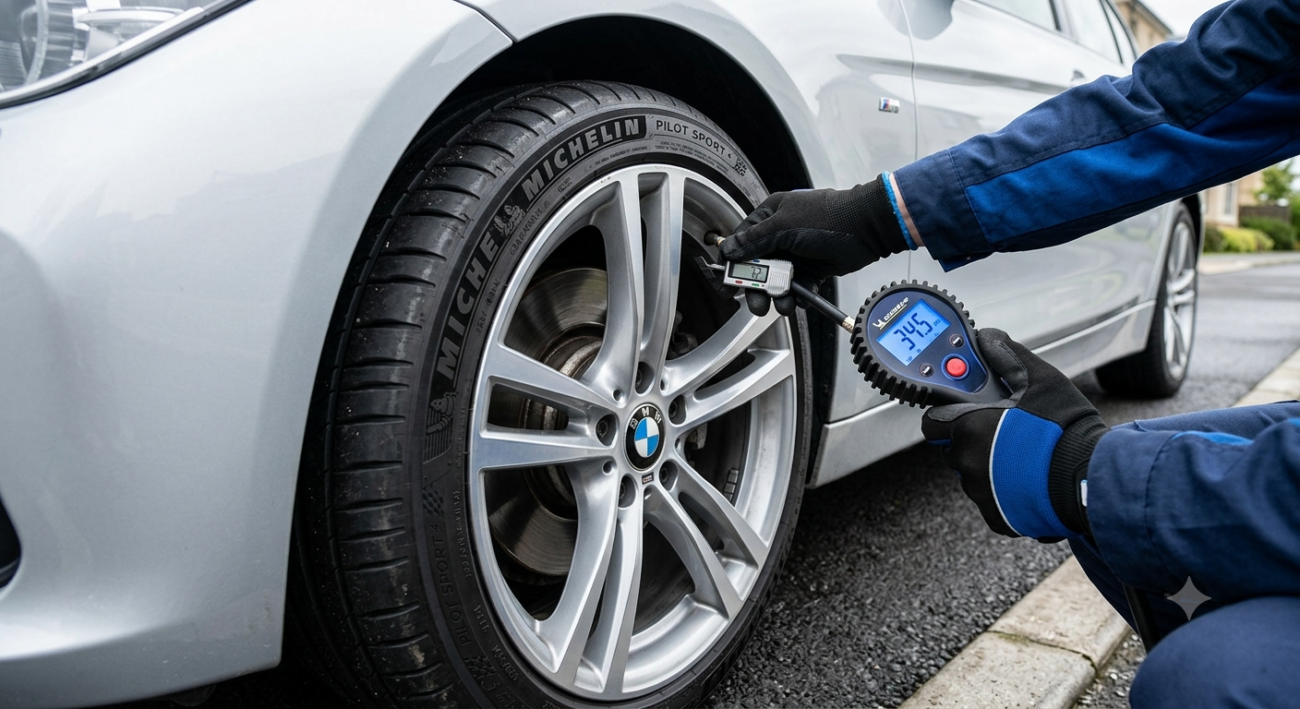
Tread Depth Directly Affects Road Grip
The tread pattern on a tyre is designed to move water away from the contact surface. This helps prevent aquaplaning, a dangerous situation where a layer of water separates the tyre from the road. Once tread becomes too shallow, the tyre struggles to clear water, increasing the chance of skidding.
This is another reason Why Tyre Health is Crucial for Avoiding Road Accidents. Worn tread can reduce grip on wet, muddy, icy, or uneven roads. Although the legal minimum tread depth varies by location, replacing tyres before they reach the minimum limit is often the safer choice. Drivers should check the manufacturer’s recommendations and inspect tread wear indicators regularly.
Uneven tread wear is also a warning sign. If one side of the tyre is wearing faster than the other, the cause could be incorrect alignment, poor inflation, suspension problems, or an unbalanced wheel.
Correct Tyre Pressure Improves Stability
Tyre pressure affects braking, steering, fuel economy, and overall vehicle stability. Underinflated tyres create more rolling resistance, generate excess heat, and may flex excessively at higher speeds. Overinflated tyres reduce the size of the contact patch and can make the vehicle feel less stable, especially on wet roads.
Understanding Why Tyre Health is Crucial for Avoiding Road Accidents means recognising the importance of checking pressure regularly. Tyre pressure should be measured when the tyres are cold and adjusted according to the vehicle manufacturer’s instructions. The recommended figures are usually found in the owner’s manual, on the driver’s door frame, or inside the fuel flap.
Pressure should be checked before long journeys and whenever the vehicle carries heavy loads. Do not rely only on visual inspection, because a tyre can be significantly underinflated without looking flat.
Damage, Age, and Load Ratings Matter
A tyre may appear to have sufficient tread but still be unsafe. Cuts, cracks, bulges, punctures, and exposed cords can weaken the structure and increase the possibility of a blowout. Sidewall damage is particularly serious because the sidewall supports the vehicle and absorbs impact from potholes and kerbs.
The importance of Why Tyre Health is Crucial for Avoiding Road Accidents also includes tyre age. Rubber gradually hardens and loses flexibility over time, even if the vehicle is not driven frequently. Check the manufacturing date and ask a qualified technician to assess older tyres, especially when cracks or hardened rubber are visible.
Every tyre must also have the correct load and speed rating for the vehicle. Using unsuitable tyres can affect handling and may lead to failure when the car is heavily loaded or driven at motorway speeds. Always follow the specifications provided by the vehicle manufacturer.
Alignment and Wheel Balancing Prevent Uneven Wear
Wheel alignment determines how the tyres meet the road. Incorrect alignment can cause the vehicle to pull to one side, create uneven tread wear, and make steering feel unusual. It may occur after hitting a pothole, striking a kerb, or driving on damaged roads.
Wheel balancing is equally important. Unbalanced wheels can cause vibrations through the steering wheel or vehicle body, particularly at higher speeds. Over time, this vibration can accelerate tyre wear and place stress on suspension components.
The link between Why Tyre Health is Crucial for Avoiding Road Accidents and alignment is clear: tyres that wear unevenly cannot provide consistent grip. If you notice vibrations, steering changes, or unusual wear patterns, arrange an inspection promptly rather than waiting for the next service.
Weather Makes Tyre Condition Even More Important
Weather conditions can quickly expose tyre weaknesses. Rain reduces road friction, while standing water increases the risk of aquaplaning. Cold temperatures can reduce tyre pressure, and extreme heat can increase internal pressure and stress. Snow and ice require appropriate tyres with sufficient tread and suitable rubber compounds.
This explains Why Tyre Health is Crucial for Avoiding Road Accidents throughout the year, not just during winter. Before seasonal changes, check tread depth, pressure, condition, and the suitability of your tyres for expected conditions. Drivers should also increase following distances and reduce speed when roads are wet, icy, or slippery.
A Simple Tyre Inspection Routine
A basic inspection can be completed in a few minutes. Before driving, look for visible cuts, cracks, bulges, trapped objects, or unusual wear. Check that the valve caps are present and examine the tread across the full width of each tyre. Do not forget the spare tyre, if your vehicle has one.
The best way to apply Why Tyre Health is Crucial for Avoiding Road Accidents in daily life is to create a routine. Check pressure at least once a month, before long trips, and after carrying heavy loads. Pay attention to warning signs such as repeated pressure loss, vibration, pulling to one side, longer stopping distances, or unusual road noise.
If a tyre loses pressure repeatedly, do not simply inflate it and continue driving. It may have a puncture, damaged valve, or structural problem that requires professional attention.
Professional Maintenance and Timely Replacement
Tyre inspections should be completed by a qualified technician whenever damage, uneven wear, or handling problems are found. Professionals can assess alignment, balancing, suspension, tread condition, and internal damage that may not be visible from the outside.
Do not delay replacing tyres that are worn, aged, damaged, or incorrectly rated. Fitting new tyres in pairs on the same axle can help maintain balanced handling, while drivers should follow professional advice about tyre rotation and replacement.
Conclusion
Tyres are essential safety equipment, not simply accessories that help a vehicle move. Their tread, pressure, age, condition, alignment, and load rating all influence how safely a vehicle performs.
Knowing Why Tyre Health is Crucial for Avoiding Road Accidents encourages drivers to take simple but meaningful action. Inspect tyres regularly, maintain the correct pressure, respond to warning signs, and replace unsafe rubber without delay. A few minutes of maintenance can improve grip, braking, stability, and confidence—helping protect you, your passengers, and everyone else sharing the road.